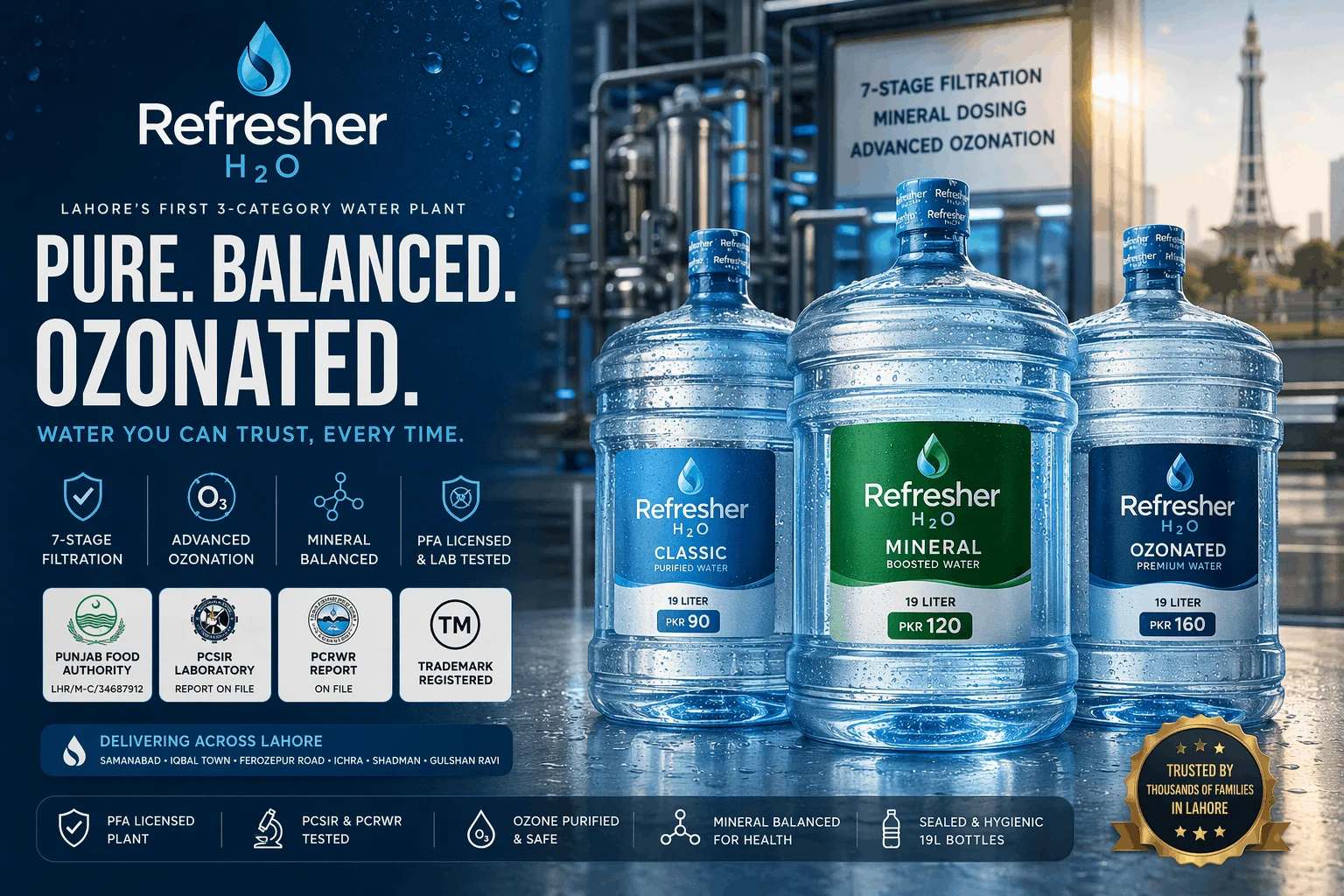
Filtered, RO, mineral-adjusted and ozonated water each do a different job. This Lahore guide compares them, explains Samanabad water-quality evidence, and lists the checks to make before choosing a supplier.
Filtered Water vs Mineral Water: Which Is Safe in Lahore?
Filtered, RO, mineral-adjusted and ozonated water are not interchangeable. Learn what each process does, what studies found about drinking water in Samanabad, Lahore, and how to check any supplier—including the category-specific steps in our 10-stage workflow.

🛡️ Why You Can Trust This Guide
- Dated evidence links to WHO, local research and original laboratory documents; unverified statistics have been removed.
- Written and reviewed by Muhammad Ali Zaidi (known as Muhammad Ali), PhD, University of Montpellier, France — GAIA Doctoral School; founder and water processing lead at Refresher H2O.
- Our June 2026 PCRWR report and separate earlier PCSIR document are published for inspection. A laboratory report applies to its submitted sample and tested parameters.
- This guide is published by a water supplier with a commercial interest. The same evidence checklist applies to us and to other suppliers.
WHO data: why drinking-water evidence matters
WHO distinguishes drinking-water contamination from the broader risks of unsafe water, sanitation and hygiene. Its September 2023 fact sheet reports these dated global estimates:
Read WHO’s drinking-water fact sheet. These are global estimates, not measurements of Lahore households or Refresher H2O.
The Pakistan context: source, pipes and handling
Water quality can change between its source and the point of use. Distribution leaks, source contamination, storage tanks and reused bottles require different checks. A national percentage cannot establish the condition of one Lahore street or supplier.
What does a deep borewell change?
Refresher H2O reports using its own approximately 700-foot borewell instead of WASA distribution water. This avoids drawing from that municipal pipe network; it does not rule out groundwater contamination or problems with the borehole, storage or bottling. Depth alone is not a safety certificate.
Samanabad water quality: what dated evidence shows
These sources describe specific samples or events. They do not test Refresher H2O or establish today’s conditions in every street.
| Source and date | Scope | Finding | Limit |
|---|---|---|---|
| Samanabad study, 2023 — PASTIC abstract | 300 samples across three income groups | The abstract reports faecal coliform in sampled low- and middle-income areas and suggests possible underground sewage leakage. | Historical sampled locations; not every household or a bottled-water test. |
| Scientific Reports, 11 June 2024 | 50 tap-water samples across Samanabad and Gulshan-e-Ravi | The abstract reports about 613 mg/L average TDS in the Samanabad samples. TDS alone is not a safety verdict. | Physico-chemical research; not evidence that all current local water is unsafe. |
| Dunya, 17 February 2026 | Residents in Samanabad, Ghalib Colony and Pakki Thatti | Reported sewerage problems and discoloured supply. | Journalism and complaints, not laboratory analysis. |
Swipe inside the table on mobile; open each source to check its scope.
What exactly goes wrong when the water isn’t clean?
Contaminated water doesn’t just cause one disease. It’s a bouquet — and children pay the heaviest price.
| Disease | Main cause | Common symptoms | Risk group |
|---|---|---|---|
| Diarrhoea | Bacterial / viral / parasitic contamination | Watery stools, dehydration | Children under 5 (highest) |
| Cholera | Vibrio cholerae in fecal-contaminated water | Severe watery diarrhoea, rapid dehydration | All ages |
| Typhoid fever | Salmonella Typhi | Prolonged fever, weakness | Children, young adults |
| Dysentery | Shigella / amoeba | Bloody diarrhoea, cramps | All ages |
| Hepatitis A | HAV from fecal contamination | Jaundice, fatigue, liver inflammation | Children, adults |
| Giardiasis | Giardia protozoa | Bloating, diarrhoea, weight loss | All ages |
| Polio | Poliovirus (fecal-oral) | Paralysis, nerve damage | Children under 5 |
Disease list per WHO drinking water fact sheet and PCRWR water quality reports. Swipe left on mobile to view full table.
What filtration removes and what still needs checking
“Filtered water” describes a process, not a complete specification. Sediment filters reduce particles; carbon addresses selected taste, odour and organic issues; RO membranes reduce dissolved salts. These treatments are not interchangeable.
- Performance depends on the equipment, maintenance and operating conditions.
- Treated water can be recontaminated in tanks or bottles.
- RO reduces minerals; remineralisation adjusts the finished profile and taste. Food remains an important mineral source.
- A TDS meter does not detect every chemical or microbial hazard.
What ozonated water means and its limitations
Ozonated water is water treated with ozone (O₃) as an additional disinfection step. Ozone decomposes, but treatment performance depends on its operating conditions and the source water. It does not excuse poor bottle hygiene.
Why bottled-water plants use ozone
- It provides an additional controlled disinfection step.
- It breaks down rather than providing a lasting disinfectant residual.
- Ozonation can form by-products, including bromate where bromide is present; appropriate process control and testing are necessary.
WHO drinking-water quality guidelines explain risk management and treatment considerations. They do not endorse a specific supplier or stage count.
| Check | Filtration / RO | Ozonation |
|---|---|---|
| Main role | Depends on the filter or membrane | Additional oxidation and disinfection |
| Maintenance | Cartridges, membranes and system integrity | Dose, contact conditions and operation |
| Bottle hygiene | Still required | Still required |
| Proof of finished quality | Relevant dated tests | Relevant dated tests, including applicable by-products |
Why mineralisation matters: calcium, magnesium, sodium
RO reduces dissolved salts, including calcium and magnesium. Mineral-adjusted water adds selected mineral salts for a defined finished profile and taste; this is different from naturally sourced mineral water. Mineral content does not by itself establish safety or suitability for an individual.
| Mineral | Role in body | Why it matters in drinking water |
|---|---|---|
| Calcium | Bone & teeth health, muscle function, nerve signalling | Water may contribute calcium; the amount depends on its measured concentration |
| Magnesium | Over 300 enzyme reactions, muscle & nerve function, cardiac rhythm | Contribution depends on the finished concentration and the volume consumed |
| Sodium | Fluid balance, nerve conduction | Sodium concentration matters for people with prescribed restrictions; check the actual analysis |
General physiology roles. Individual needs vary — consult a clinician for specific medical guidance.
The key word in Refresher H2o’s mineral boosting is controlled. We do not guess. We dose with pharmaceutical grade mineral salts to hit stable category-specific targets, batch after batch.
The minerals we use: Macco Organiques (Czech Republic)
Pharmaceutical grade · Halal · Kosher
Refresher H2o uses pharmaceutical grade calcium, magnesium and sodium mineral salts from Macco Organiques — a European producer based in the Czech Republic, part of Canada’s Lallemand group, serving infant formula, IV & dialysis solution manufacturers, and mineralised bottled water producers worldwide.
Per Macco Organiques’ own certification page, production runs under GMP ICH Q7, with final processing in ISO Class 8 (GMP Grade D) cleanrooms. Their mineral salts are Halal and Kosher certified, plus FSSC 22000 and ISO 9001.
Explore their portfolio on the official Macco products page.
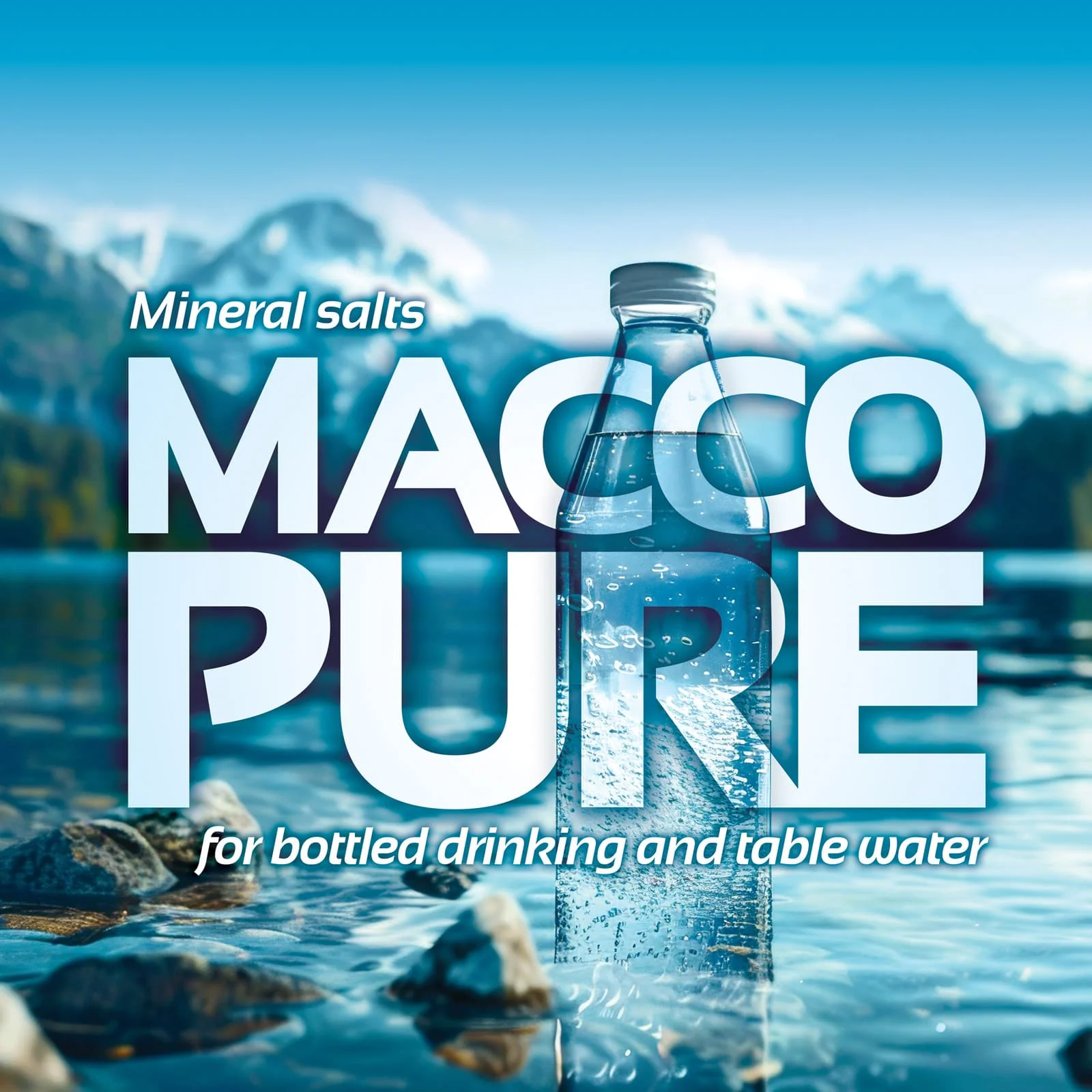
3-way comparison: purified, mineral-adjusted and ozonated
| Dimension | Classic Purified | Mineral Boosted | Ozonated Premium |
|---|---|---|---|
| Core treatment | Sediment, carbon, micron polishing, RO and UV | Same core treatment | Same core treatment |
| Controlled mineral adjustment | Not included | Calcium, magnesium and sodium route | Calcium, magnesium and sodium route |
| Additional ozonation | Not included | Not included | Included |
| Bottle hygiene | Inspection, washing and UV bottle hygiene | Same workflow | Same workflow |
| Documents to inspect | Current PFA licence; June 2026 PCRWR sample report; separate earlier PCSIR document. These do not separately certify every category or future bottle. | ||
| Current refill prices | PKR 90 | PKR 120 | PKR 160 |
Prices are a brief category reference. For current ordering details and bottle charges, use the homepage pricing section.
Supplier checks: questions before ordering
- Licence: ask for a current PFA licence and match the business name.
- Laboratory report: check its date, sample identity and parameters, not just the laboratory logo.
- Treatment: ask what equipment is used and how it is maintained.
- Bottle hygiene: ask how returned bottles are inspected, washed and sanitised before filling.
- Minerals: request the finished profile and mineral-source documentation.
- Seals: inspect the delivered bottle and cap.
- Clarity: compare written answers rather than assuming a higher price guarantees safety.
Our licences & reports (open the original documents)
Inspect the original documents and their dates. PFA licensing, independent laboratory analysis and trademark registration answer different questions; none alone guarantees every bottle.
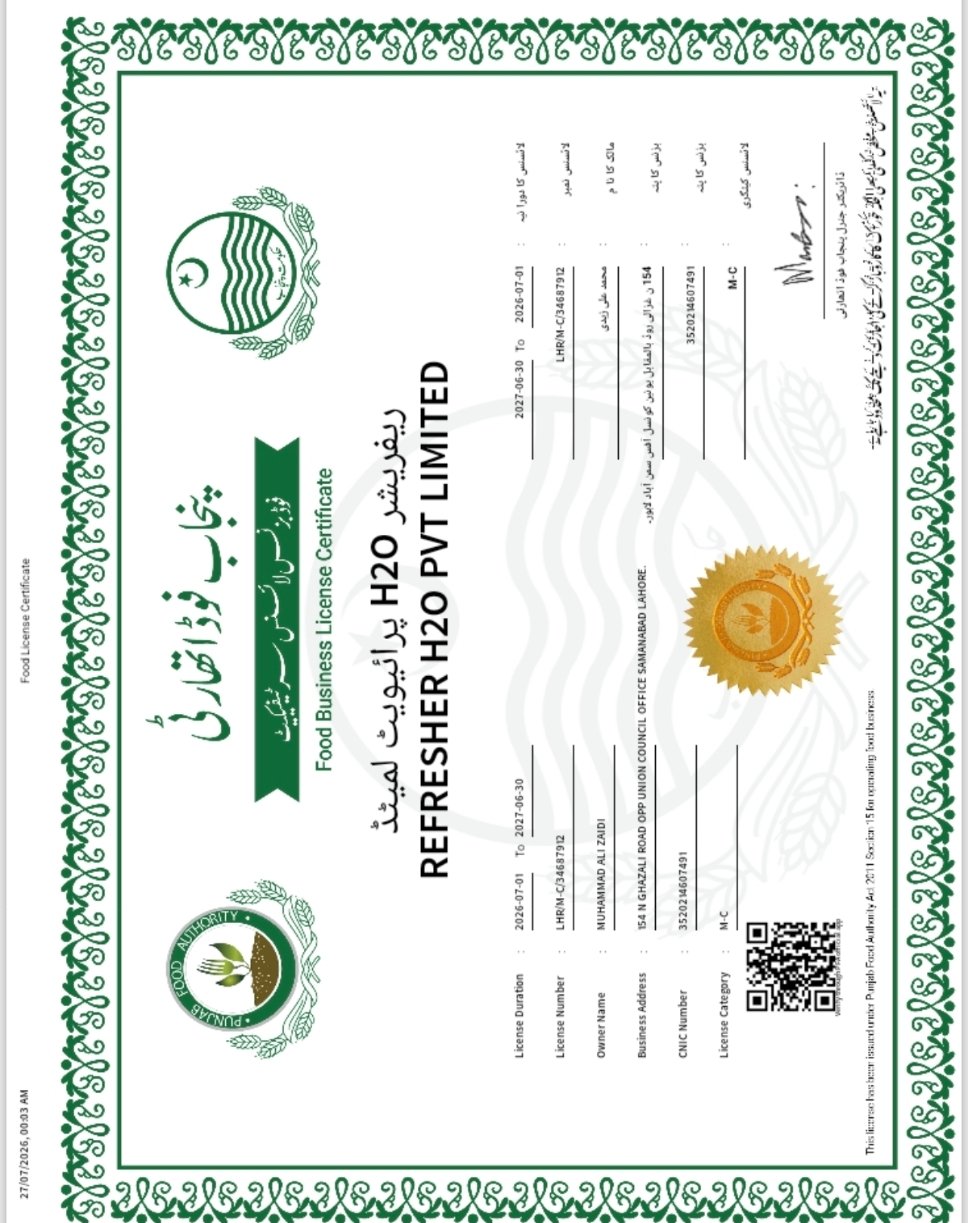 Punjab Food Authority
Licence LHR/M-C/34687912
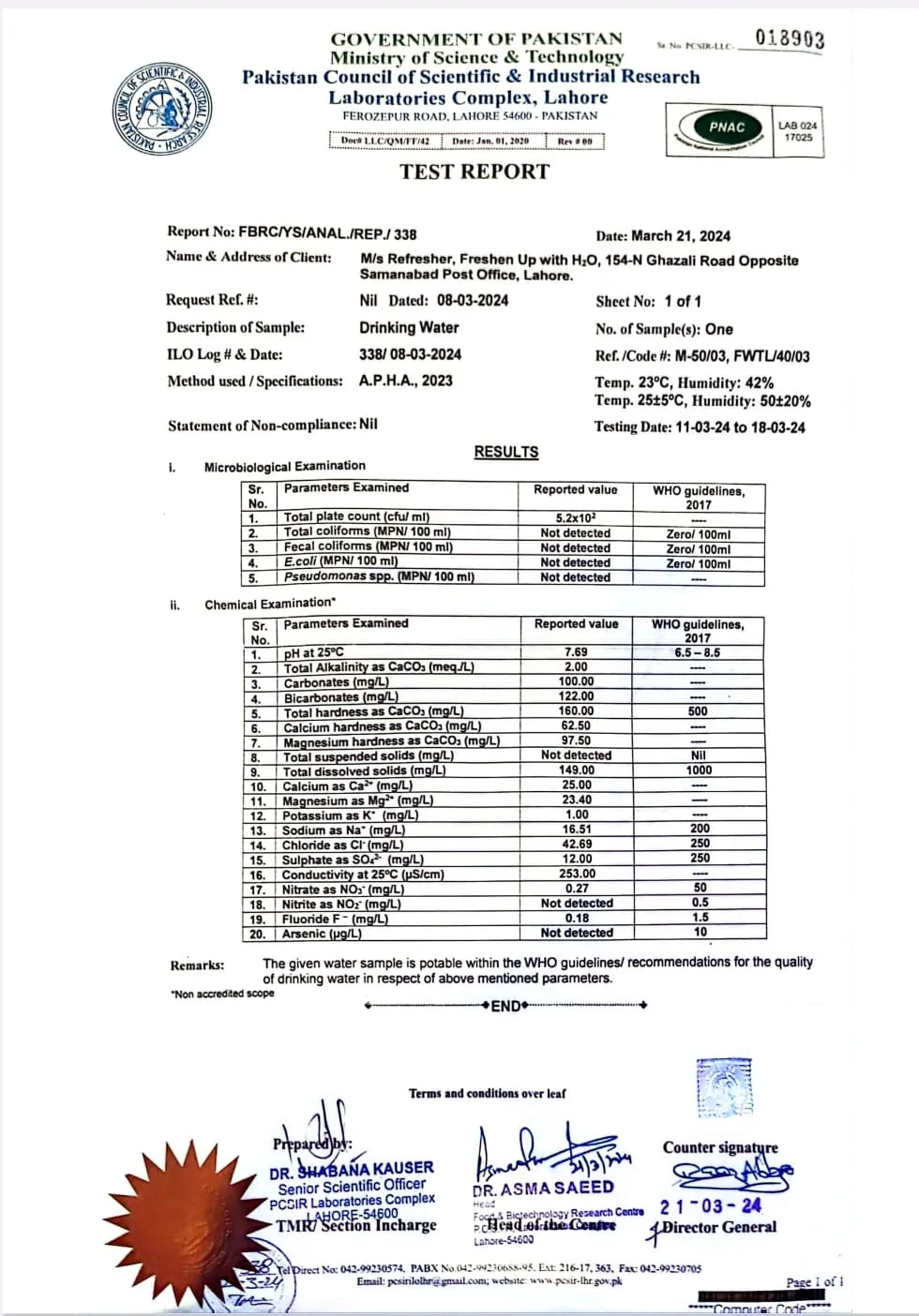 PCSIR Laboratory
Separate earlier PCSIR document
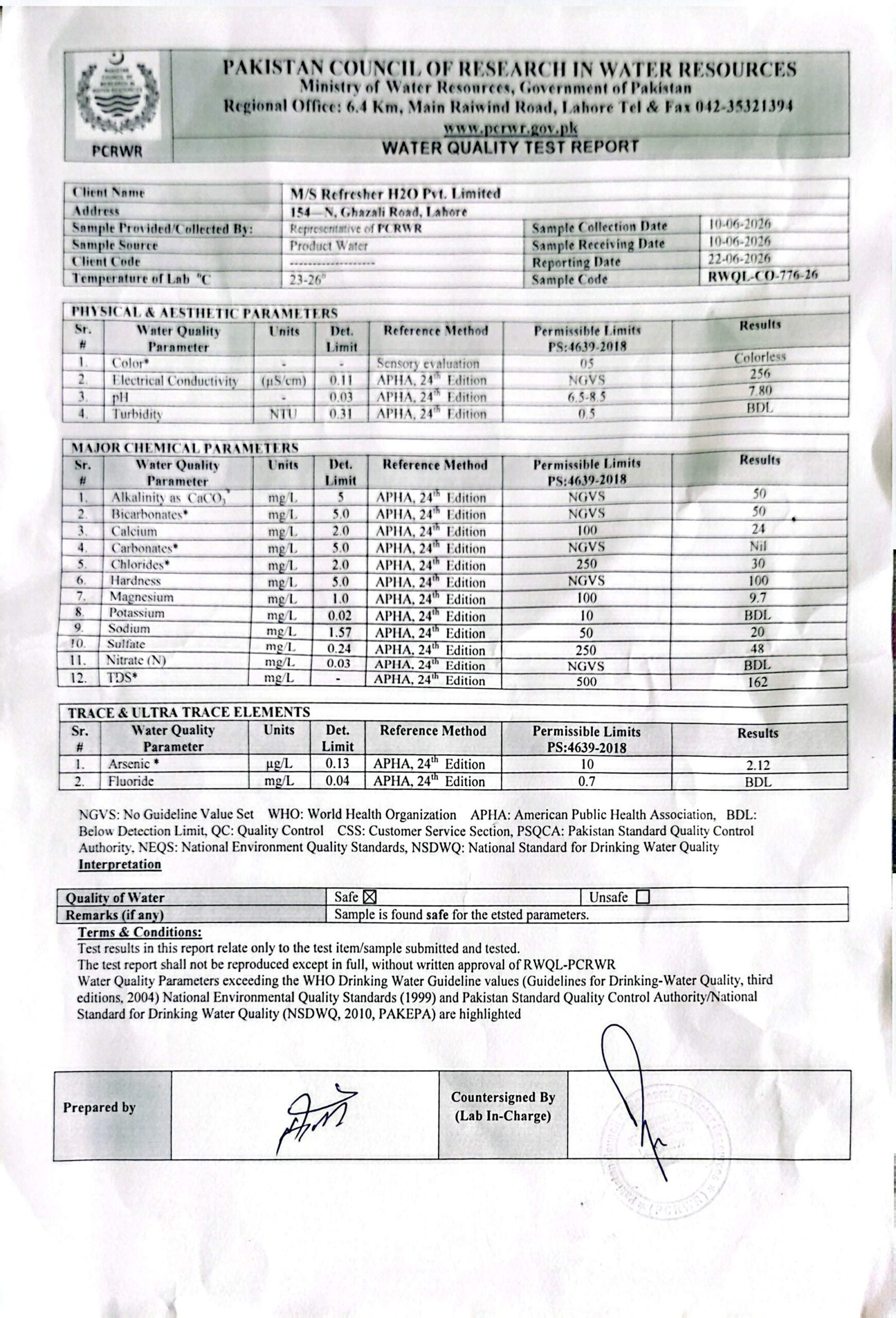 PCRWR Report
Sample 10 June · report 22 June 2026
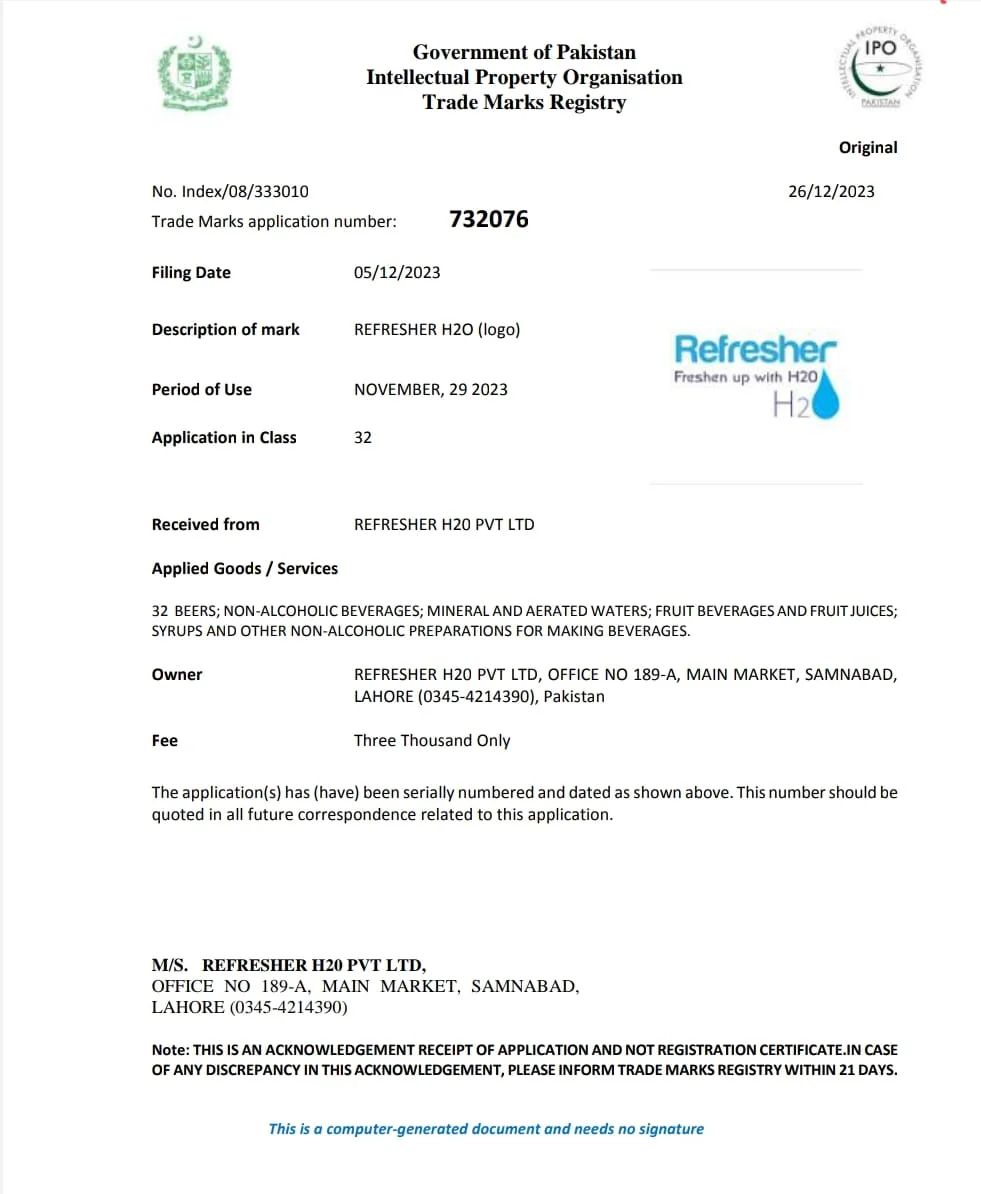 Trademark Registered
Refresher H2o™ brand
Our methodology (what “safe” actually means here)
🧪 Our 10-stage processing workflow
- Sediment pre-filtration — reduces suspended particles from incoming borewell water.
- Activated carbon — addresses selected odour, taste and organic-compound issues.
- Fine micron polishing — reduces finer particles before RO.
- Reverse osmosis — reduces dissolved salts. The plant reports a 0-TDS base-water meter reading; this is not proof of absolute chemical purity or sterility.
- UV water treatment — an additional treatment stage requiring correct operation and maintenance.
- Controlled mineralisation — calcium, magnesium and sodium are added for Mineral Boosted and Premium only.
- Ozonation — the additional finishing step for Ozonated Premium only.
- Bottle inspection and washing — returned bottles are checked and cleaned before filling.
- UV bottle hygiene — part of the bottle-handling workflow; not a claim of validated sterilisation.
- Filling, sealing and dispatch — the selected category is filled and sealed before scheduled delivery.
Category scope: stages 1–5 cover core treatment; stages 6 and 7 are category-specific; stages 8–10 cover bottle hygiene and packing. They are not ten filters applied to every bottle.
Routine checks: the plant reports daily pH and TDS checks under its chemist and operational oversight. These do not replace microbiological and chemical laboratory testing. No claim of daily external microbiology testing is made here.
The June 2026 PCRWR document covers its dated sample; it does not independently validate a later workflow upgrade. No unconfirmed upgrade month is stated.
Household example: compare evidence before switching
Situation: a household wants clearer documentation and consistent bottle handling.
Compare: ask each supplier for its current licence, dated laboratory report, mineral profile and bottle-cleaning routine.
Choose: weigh the documented process and personal taste preference. Do not infer disease prevention or medical benefit from a category name.
Illustrative example only; no real customer story, quote or health outcome is asserted.
💡 Questions to ask any Lahore water supplier
Use these questions with any supplier—including us.
Checklist 1 — Compare the evidence
Ask for specific records, dates and treatment details.
Checklist 2 — Compare category scope
Understand treatment and taste differences before ordering.
About the author
Muhammad Ali Zaidi (known as Muhammad Ali)
Founder & Water Processing Lead, Refresher H2O Pvt Limited. PhD, University of Montpellier, France — GAIA Doctoral School. Operational expertise includes plant oversight, RO and UV treatment, mineral-adjustment and ozonation workflows, bottle hygiene, maintenance coordination and water-quality document communication.
Written and technically reviewed by Muhammad Ali Zaidi. Last updated: .
This guide is published by a drinking-water supplier with a commercial interest. Education and operational experience do not replace the laboratory evidence or individual clinical advice.
📚 Sources & further reading
- Samanabad study, 2023 — PASTIC abstract
- Scientific Reports, 11 June 2024
- Dunya, 17 February 2026
- WHO drinking-water fact sheet, 2023
- WHO drinking-water quality guidelines, 2026 update
- Macco Organiques certification information
- Macco Organiques product information
- Refresher H2O dated PCRWR report explanation
Sources checked for this update on 23 October 2026. Historical findings are labelled by date; conditions and figures may change.
❓ Frequently asked questions
No. Performance depends on the actual treatment system, maintenance, source quality and handling. A category name alone cannot establish safety. Ask for relevant dated laboratory results.
RO reduces dissolved salts. Mineral-adjusted water adds selected calcium, magnesium and sodium salts to the purified base for a controlled finished profile. It is different from natural spring mineral water.
It can be, when effective treatment, hygienic storage and relevant water-quality tests support that conclusion. Low TDS alone does not prove safety; RO-only water is not automatically unsafe.
Historical studies reported quality issues in some sampled areas: the 2023 study assessed 300 samples and found faecal coliform in sampled low- and middle-income areas; the 2024 study reported about 613 mg/L average TDS in Samanabad samples. These findings do not establish conditions in every household today.
Sediment pre-filtration, activated carbon, fine micron polishing, RO, UV water treatment, controlled mineralisation, ozonation, bottle inspection and washing, UV bottle hygiene, and filling, sealing and dispatch. Mineralisation applies to Mineral Boosted and Premium; ozonation applies only to Premium.
Ozonated water receives an additional ozone disinfection step. Ozone decomposes, but process control and applicable by-product testing remain necessary. Filtration performance depends on the filter or membrane used.
The plant states that it uses calcium, magnesium and sodium salts from Macco Organiques, Czech Republic. The supplier publishes Halal and other certification information. Ask for the applicable product, certificate scope and batch documentation; supplier certification is not certification of the finished water.
Check the current PFA licence, latest laboratory report date and sample identity, source protection, treatment maintenance, mineral documentation and returned-bottle cleaning routine. Apply the same checks to every supplier.
See the homepage for current categories, prices and delivery coverage. Delivery from Samanabad to nearby listed areas is subject to route and address confirmation.
Ready to upgrade your family’s water?
Compare purified, mineral-adjusted and ozonated categories from our Samanabad plant, inspect the published documents, and use the homepage for current ordering details.
Leave a Reply